
When selecting content pieces to promote through ads, what is your criteria? Is it impressive visuals, strong storytelling, or high engagement rates? While these elements can create excellent social media content, they don’t always translate into advertising performance. They lack the authenticity offered by the UGC ad strategy for FMCG brands in the GCC.
The reality is that GCC audiences consume organic content and paid ads differently. No matter how polished or creative an ad is, many consumers still see it as advertising. What often influences them more is authenticity. Seeing products used by real people in realistic situations can actually drive purchase decisions.
At FMCG360, we invest in a strong UGC ad strategy for FMCG brands in the GCC that becomes valuable. Our influencer marketing and UGC services don’t rely solely on aesthetics or reach. Instead, we use relatable content from local creators to build trust and strengthen credibility.
So, what separates good content from high-converting UGC ads? Let’s break it down!
Good Content vs. High-Converting UGC Ads Comparison

What is identified as good content is usually traditional advertising content with studio-based capabilities, like HD cameras, professional-grade microphones, and carefully planned production. The goal is often to support a product launch, communicate the brand’s vision, educate consumers, or generate engagement. However, while audiences may enjoy such content, they might not always feel motivated to try the product themselves.
However, the UGC ad strategy for FMCG brands in the GCC takes a different path. They show how products fit naturally into consumers’ daily lives. Common examples include taste tests, recipe videos, product recommendations, and unboxing moments. The key to their success isn’t expensive production, but the fact that audiences can easily imagine themselves in the content creator’s place.
Almarai “ Appreciate the Blessing” As an Example of TOFU Awareness Content
In 2021, Almarai launched a massive Ramadan campaign, “Appreciate the Blessings.” It centered on responsible consumption and community values. Its purpose was to strengthen brand affinity and emotional connection with GCC audiences. The campaign had achieved over 135 million views and widespread impact in the Arab World.
While this type of content can generate impressive awareness and engagement, it doesn’t aim to send shoppers to the shelf. It comes with a different objective from conversion-focused UGC ads.
St. Dalfour Arabia UGC Ad Strategy for FMCG Brands in the GCC
During our work on a UGC ad strategy for St. Dalfour Arabia campaigns, we implemented a series of creator-led recipe videos. These videos generated strong engagement while presenting the product through practical consumption moments. Our main approach was showcasing real usage situations that consumers could easily recreate in their own kitchens. Rather than focusing on product claims alone, the content demonstrated how the fruit spreads could be incorporated into everyday meals and recipes.
The result? One creator recipe featuring St. Dalfour fruit spreads generated more than 139,000 plays and over 2,000 likes. Another one has achieved over 500,000 views in just one week and has exceeded 1 million total views.
Looking for more content like this? Subscribe to our newsletter for exclusive insights into creative strategies that drive FMCG growth in the GCC.
Key Elements of a High-Conversion UGC Ad Strategy for FMCG Brands in the GCC

So, now you’re probably wondering: does every piece of content featuring an influencer holding a product count as high-converting UGC? No, that’s not what we call a UGC ad strategy for FMCG brands in the GCC. According to a recent study on Saudi consumers, user-generated content influences purchase behavior more strongly when it provides rich information and shares a clear positive experience.
What falls within this categorization should have these marks:
1- Strong hook within the first 3 seconds
This isn’t a blog introduction. It’s a fierce competition in a fast-scrolling environment. You need something hooking and relatable that forces a viewer to stop their semi-automated thumb motion. In 3 secs or less, you should have a surprising statement, innovative recipe idea, or expression of common frustration.
2- Clear product benefit
Don’t be tempted to discuss every product feature in the same video. Instead, let it be one feature at a time. This is to avoid overwhelming the viewers. Your product indeed excels in many aspects. But one advantage gives enough content for one video.
3- Authentic creator delivery
The internet is oversaturated with sponsored content. Audiences grew in increased familiarity and detection ability. Without genuine recommendations or authentic expression, viewers will lose interest. Selecting an influencer known for authenticity and trust signals among their audience affects perception.
4- Problem-solution structure
The success of your content is often tied to solving existing problems for the user. So, start by acknowledging an existing problem, such as finding a quick, healthy snack for children during the back-to-school rush. Then, position your FMCG product as a real and immediate solution.
5- Social proof or personal experience
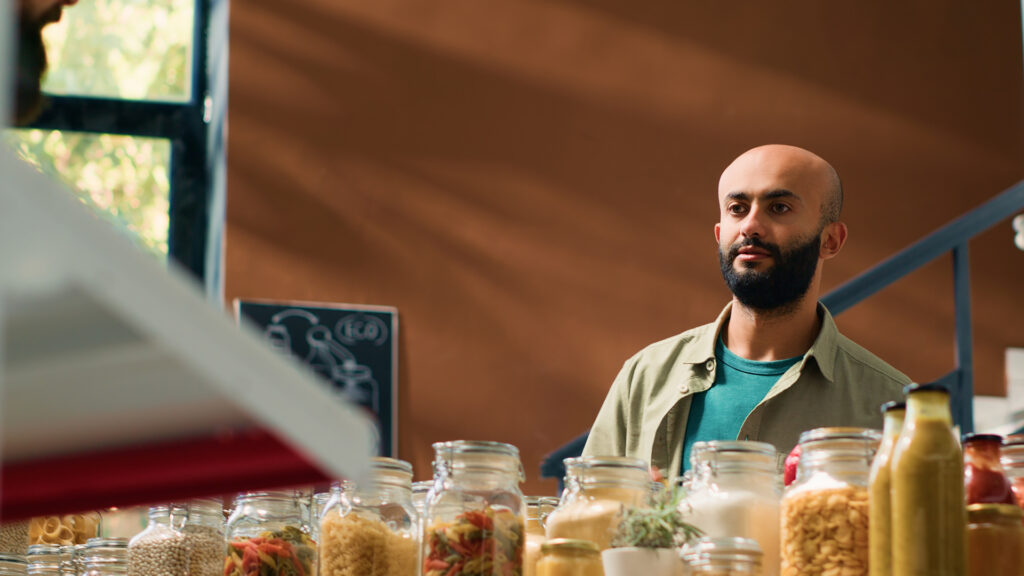
Trust is built on true experiences, not scripted marketing statements. This happens when a creator details their personal routine or highlights verified community feedback. Viewers usually see this as social proof necessary to lower purchase hesitation and encourage purchase.
6- Clear call-to-action
What’s the next step? Your influencer’s content must end with a clear CTA. It doesn’t have to be an aggressive one. A simple encouragement to try out a recipe, learn more about a product, or visit a retailer to look for a product. Always tie your content to a potential purchase decision.
Top-of-the-funnel awareness content and the bottom-of-the-funnel UGC ad strategy for FMCG brands don’t contradict each other. They complement each other. High-budget corporate assets build long-term brand authority, but real growth relies on conversion efficiency. For that reason, you need authentic, creator-led recommendations. This can be a powerful tool to improve shelf movement and purchase decisions.
Ready to turn views into retail results? Request a snapshot today, where our experts lay out a data-driven UGC ad strategy built for the GCC landscape.