When your creative team creates a piece of content that breaks your usual performance benchmarks, it can feel like a major win. The video starts spreading, and consumers are talking about the product. All of a sudden, you have viral content for FMCG brands.
But one viral hit doesn’t give you a formula to copy. While you still need continuity to stay on top, recreating the same content piece won’t necessarily give the same result. The real opportunity is to understand what drove its performance and use those learnings to shape the next pieces of content.
So, what actually makes viral content for FMCG brands? And how can brands use those patterns without chasing every viral trend?
Does your FMCG content fail to go viral consistently, despite high-quality production and big ideas? Our content creation and curation services can help you turn consumer insights, creative ideas, and performance data into a more repeatable content strategy.
What Does Viral Content for FMCG Brands Really Mean?
When you read the word viral, your mind automatically translates it into millions of views. However, a spike in views isn’t the only sign of high-performing content. There is no uniform measurement that defines when FMCG content becomes viral. The right measurement depends on what you want the content to achieve.
When you target viral content, you can be aiming for:
- Reach: We usually call it a vanity metric because, when considered alone, it doesn’t tell you whether the content created meaningful value
- Participation: These are performance metrics that can reflect stronger interest. They show interest through comments, shares, and saves.
- Product recall: You can evaluate your content’s success if audiences remember the product, rather than only the creator or script.
- Commercial relevance: You can compare the impact of online posts against predefined objectives. This includes increased searches, online or offline traffic, trial rates, or sales.
Heinz’s campagin on TikTok with the hashtag #HeinzIt offers an example of the diverse aspects of virality. The campaign was launched with the help of multiple creators on the platform and targeted audiences in the KSA and UAE. According to TikTok’s case study on the campaign, the campaign has achieved 33.6M views and around 2,400 UGC videos. The study also reports lifts in purchase intent of around 30% in the UAE and 24% in KSA.
Why FMCG Content Has Strong Viral Potential?
While FMCG covers a wide range of categories, food and beverage brands have a natural advantage when it comes to creating content that people can quickly understand, enjoy, and recreate. Compared with detergents, diapers, or other less visually demonstrative products, F&B products are closely connected to daily routines, sensory experiences, and social occasions that already generate conversations.
1- Everyday Relevance
Food and beverage products are closely associated with daily and repeated routines that people automatically understand and practice. Breakfast ideas, meal preparation, grocery shopping, coffee breaks, and snacking are all familiar experiences that give brands plenty of opportunities to create relatable content.
When content reflects these routines or offers something useful within them, consumers have a natural reason to pay attention, save it, or share it.
2- Visual Stimulation Through Viral Content for FMCG Brands
Cooking videos and product-focused Reels can translate sensory experiences into something viewers can almost imagine experiencing themselves. Color contrast, pouring, sizzling, melting, and crunching sounds can make the product or finished dish more appealing while keeping the content visually engaging.
This gives F&B brands an advantage that many other FMCG categories don’t have. F&B products themselves become part of the visual experience.
Need inspiration on how viral content for FMCG brands works? Check out our St. Dalfour Arabia case study for insight into ee how we transformed localized consumer insights and recipe utility into a scalable growth platform across the GCC
3- Cultural and Seasonal Occasions
In MENA, food is an essential part of many significant cultural and seasonal occasions. Ramadan, Eid, summer gatherings, back-to-school routines, and national celebrations all create familiar consumption moments that brands can build content around.
These occasions also vary across countries and communities, from the dishes served to the way people prepare, share, and consume them. That gives FMCG brands opportunities to make content locally relevant instead of simply adapting a global idea into Arabic.
Almarai’s Ramadan 2025 campaign provides a useful example of this contextual approach. Instead of placing the same product ad across different types of content, the brand created contextual ads for 15 products based on what audiences were watching. As a result, the campaign reached 29.4 million people across MENA, with 56.8% completion rates.
4- Participation Invitation
Recipes, product combinations, and taste tests don’t just give consumers something to watch; they give them something they can try themselves. This creates a natural opportunity for brands to encourage participation and generate UGC. In most cases, this paves the path for viral content for FMCG brands.
5- Low-Friction Storytelling
While storytelling is fundamental for F&B viral content, it doesn’t require complex scenarios or plot twists. A simple transformation can communicate the entire idea within seconds.
A consumer can instantly understand and interact with an ingredient transformation into a meal. This short path correlates with the nature of fast-moving social feeds.
Trend Riding vs. Trend Adapting: Which Direction to Go?
In the quest to go viral, many brands randomly and repeatedly follow every trend that comes along. But going down this route won’t automatically make your content relevant. Making trend participation the goal shouldn’t be your priority. Instead, consider trends a tool for relevance, not the other way around. A trend becomes more useful when the brand can adapt it to its product, audience, and local context.
When evaluating trends, your social media team must ask: “Can this trend help us communicate something relevant about our product to our audience?”
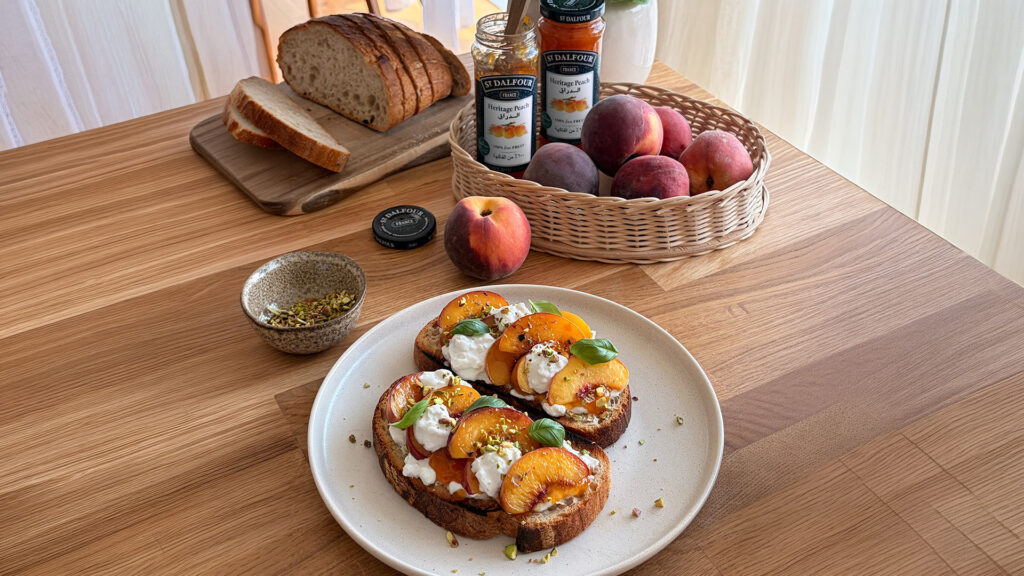
For example, when we post St. Dalfour Arabia content around the #French_Breakfast trend, we connect the trend to the product’s French identity and positioning. This makes the participation feel like a natural extension of the brand.
Want to build FMCG content that performs beyond a one-off viral hit? Contact us today to book a strategy session with our experts. Find out the problems in your current content plan and implement vital improvements based on consumer insights, creative concepts, and performance analysis.