
How to Identify Failing TikTok Influencer Marketing for FMCG Brands
TikTok influencer marketing for FMCG brands is a trend in the industry. But not all brands are turning their TikTok presence into the desired growth. Many of them fail to turn those scrolls into physical sales. Your presence on this trendy platform can be a goldmine or a black hole for your marketing budget.
Success in FMCG TikTok marketing doesn’t come from viral shots or chasing the latest trending sounds with generic influencers. Instead, you can make your way to the top through systematic partnerships with content creators who understand how to move products.
FMCG360 understands the challenges in TikTok influencer marketing for FMCG brands. Questions around audience relevance and performance transparency remain unanswered until after the campaign is already live. This opens the door wide for budget inefficiencies.
Do you suspect a budget leakage? Download our checklist to identify where your strategy is losing efficiency and how to correct it before your next campaign.
11 Signs of Failed TikTok Influencer Marketing for FMCG Brands
According to a recent marketing study by TikTok and Nielsen, TikTok campaigns deliver the highest ROI among social media platforms for FMCG brands.
If your TikTok strategy isn’t paying off, it’s rarely the platform’s fault. It can be a misfitting creator selection or a poor collaboration format.
1- Creators are Not Using Your Product Naturally
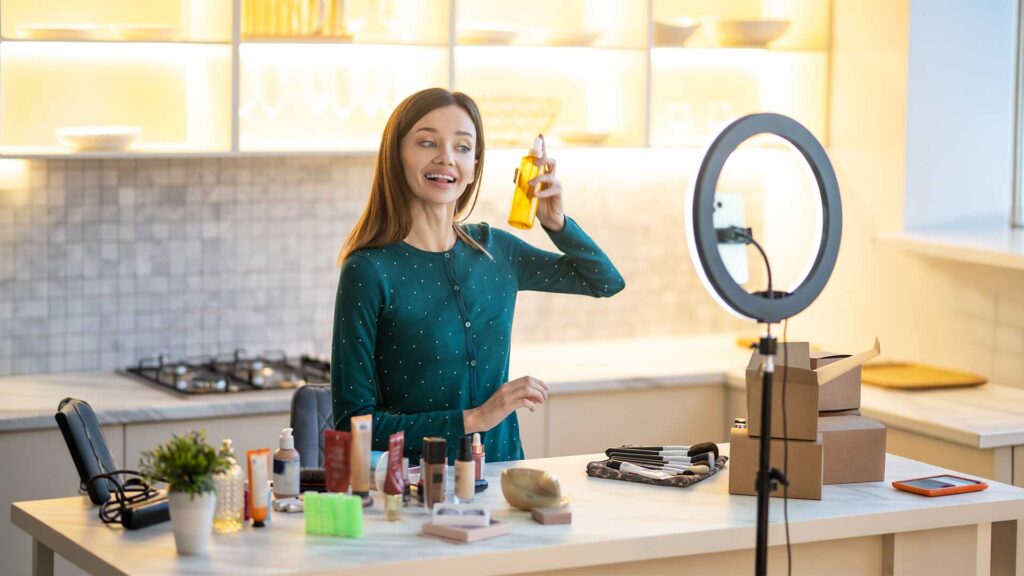
Authenticity is one of the first signals audiences respond to on TikTok. They ignore content that feels promotional and scripted. When auditing creator content, watch out for:
- Awkward Product Placement
- Generic or Stiff Talking Points
- Creator Drifting from Their Usual Style
Our social media team avoids this trap by vetting creators with relevant niches and providing a natural and strategic context. We ditch the usual information-based scripts and replace them with genuine narrative that fits the creator’s style.
2- Audience isn’t Your Target
Collaborating with a mega influencer is meaningless if the audience isn’t your actual buyers. It’s like placing an ad for a high-end perfume during a cartoon. This can inflate views, but it rarely translates into sales.
Our exit strategy in this case is vetting creators whose demographics and interests align with your target segments. We also go beyond follower count to investigate audience insights, including locations and engagement patterns.
3- No Expertise in FMCG Collaborations
If you’re planning an FMCG marketing giveaway campaign on TikTok and your chosen influencer lacks sufficient experience, the outcome won’t click. The goal isn’t just about showing the product. It’s about demonstrating usage and convenience without turning a short video into a lengthy sales pitch.
At FMCG360, we prioritize creators with a proven track record in the FMCG space. We also evaluate how they prepare the audience for a product exploration journey in a simple and relatable manner.
4- No Storytelling in the TikTok Influencer Marketing for FMCG Brands
We often see brands come to us with high-production TikTok content that’s technically perfect but remains invisible and off course, with no conversions. What do they all have in common? No context, no narrative, and nothing but product features.
By shifting from product-first policy to story-based scenarios, we have seen partners achieve stabilized performance across TikTok campaigns.
Success on TikTok doesn’t just happen. It requires a deep understanding of how the platform works and how to execute the best practices there. Check out our digital marketing services to build a TikTok strategy that connects creator content with measurable business outcomes.
5- Creators Aren’t Active in the Local Market

Getting people in North Africa familiar with your products is cool. But if your target market is the GCC, you need local influence. Foreign influencers lack the local nuance required for understanding cultural relevance, dialects, and shopping habits.
The core of our TikTok collaborations is local influencers, even if their reach is smaller. We also combine local creators with region-specific messaging to improve relevance and credibility.
6- They Ignore Comments
Ignoring the audience’s comments in TikTok influencer marketing for FMCG brands can shut a window for purchase decisions. Answering questions about usage, prices, or results gives products validation. Leaving these questions unanswered doesn’t affect the influencer’s engagement rates but weakens your product’s credibility.
Our priority is to work with active influencers who sustain a two-way communication. Additionally, we monitor the comment sections during campaigns to ensure influencers answer accurately to keep the trust signals alive.
7- Massive Metrics Fluctuations
A single viral video isn’t an indicator of consistent performance. In many cases, it’s a stroke of luck, which is poor selection criteria. Unstable view patterns can’t be used to build concrete expectations regarding reach and ROI.
Our team considers creators who show long-term consistency. We study engagement stability, average views, and posting frequency to get the whole picture.
8- Misaligned Past Collaborations in TikTok Influencer Marketing for FMCG Brands
Steer clear of a jack-of-all-trades. Influencers who have promoted everything on the shelf, from deodorants to tuna, have diluted credibility. This will directly affect your brand’s positioning, and the messaging will appear transactional, rather than selective.
We address this by auditing past collaborations to evaluate category alignment and brand fit. Creators who fulfill this requirement usually retain stronger audience trust.
9- Chasing Trends Instead of Value
Trends are a shortcut for visibility in TikTok influencer marketing for FMCG brands. However, short-lived attention won’t give your brand the attention required to move people to supermarkets. Without distinct content or original storytelling, an influencer will be just an echo of the trend, not a trendsetter. You need the latter to ensure memorability.
Our approach focuses on creators who can build original narratives for specific SKUs. We also guide creators to adapt trends in a way that supports the product’s narrative.
10- No Specific Niche in TikTok Influencer Marketing for FMCG Brands
Creators with an undefined niche indeed attract a broader audience. However, this style only focuses on quantity instead of quality, as it will only get you an unfocused audience and weaker conversion potential.
To avoid this situation, we only collaborate with niche influencers. This allows for precise targeting and stronger alignment.
11- Absent Performance Data

Inconsistent or missing performance data makes it difficult to assess the success of TikTok campaigns. Without access to the creator’s metrics, such as reach, engagement rates, and audience demographics, you can’t make informed decisions.
At FMCG360, we rely on transparent reporting and KPI alignment. This allows us to measure results accurately, improve strategy, and enhance future outcomes.
Book a FREE consultation with our team to evaluate your current creator strategy and identify practical steps to improve performance and ROI.