
4 Indispensable Keys to FMCG SEO Strategy for Brands
Remember when SEO success was as simple as avoiding black-hat tactics? Back then, the competition was lighter, SEO focused on stuffing keywords, and filling pages with content. Fast forward to today, and the SEO battlefield has expanded to new fronts, both on-site and off-site. Feeling overwhelmed? Don’t be. Buckle up, as we’ll walk you through the 4 non-negotiable elements of an effective FMCG SEO strategy for brands.
Why You Need an FMCG SEO Strategy for Brands?
FMCG website optimization strategies aren’t just another marketing trend; they’re a valuable asset. This marketing aspect is the strongest driver of online visibility. Ignore it and you’ll be left burning cash on ads that today’s audiences scroll right past.
So why exactly do you need an FMCG SEO strategy? Simply because consumers are already using online platforms to search for, compare, and review products.
Traditionally, FMCG success has been measured by increased retail foot traffic. Add to that the ability to synchronize your brand with seasonal launches and limited-time offers. Today, it’s also about showing up where customers are. But here’s the catch: your audience’s behavior is constantly shifting, and FMCG purchase decisions rely on quick impulses. With a solid, multi-layered FMCG SEO strategy for brands, you can capture those quick decisions that drive sustainable, long-term brand growth.
How To Master FMCG SEO Strategy for Brands
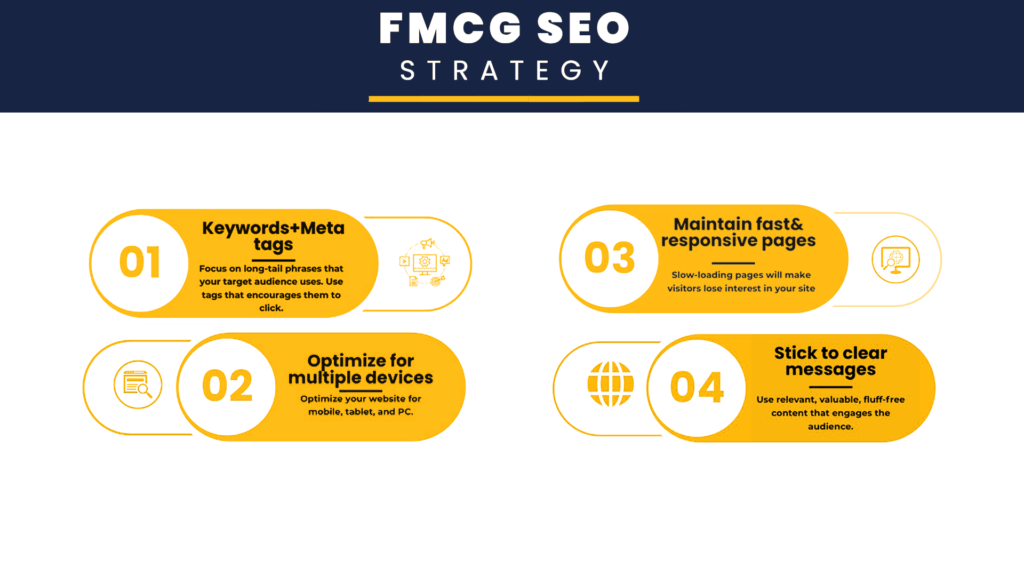
Now that you know why you need a strong FMCG SEO strategy, the next question is how to make it work. The good news? You don’t need to reinvent the wheel. By building your FMCG SEO strategy on these 4 pillars, you can achieve a decent level of FMCG customer engagement.
Speak the Right Language
No, it’s not about eloquence. In FMCG SEO strategy for brands, the right language means the right keywords and meta tags.
Nail Winner Keywords
Don’t waste time chasing broad, deep-search terms. Instead, focus on long-tail phrases that reflect the urgent needs of specific demographics. The best part? You don’t have to do the guesswork. Instead, rely on professional keyword tools that point you in the right direction.
Write Catchy Meta Tags
And let’s clear up a common misconception: meta tags aren’t just boring bits of code. They’re signals that tell search engines exactly what’s on your pages. Google’s ranking rules may change, but meta tags remain a cornerstone.
When can you master this language game? Right when you write your tags in an engaging and click-worthy way instead of stuffing them with keywords. That’s because visibility isn’t just the end goal; it’s about getting people to land on your pages.
Maintain Consistency Across Different Devices

Writing consistent content is one thing, but maintaining a visually consistent website is another. This is about ensuring your site looks good and functions smoothly across all internet-connected devices, from smartphones to desktops. Visitors can land on your site from anywhere, and you need to be ready for that moment.
Imagine this: you’re browsing a website on your office PC, and everything runs smoothly. So, you return during your lunch break to make an urgent purchase. But on mobile, the site lags, the screen cuts off, and you waste your whole break trying to figure out how to order. The outcome? You leave frustrated and likely never return.
That’s what you risk if your site isn’t responsive. And since most FMCG buyers shop directly on their smartphones, poor mobile performance doesn’t just hurt user experience. It costs you actual sales.
Design With Speed in Mind

In the FMCG world, you are not just racing against competitors, but against time as well. For FMCG buyers, speed is everything. They make quick decisions and leave just as quickly if your site slows down. A slow website doesn’t just frustrate visitors; it pushes them straight into the arms of your competitors.
Ignoring speed in your site audits keeps you stuck in the slow lane. And in today’s world of FMCG SEO strategy for brands, this can cost more than traffic. It can also hurt your search ranking and throw months, even years, of hard-earned SEO work into the nearest garbage bin.
Stick to Clear Communication
Getting visitors onto your page isn’t the finish line. It’s the start of a new chapter in your FMCG SEO strategy for brands. But here’s the catch: customers won’t give you their time or attention if they don’t understand your message. Add fluff, and you lose them instantly.
Make sure your information is presented clearly, simply, and in an easy-to-digest way. You can diversify channels and content formats, but your tone must stay consistent. Your voice is the most valuable asset to stand out. And whatever you do, avoid sending conflicting messages. Nothing kills credibility faster.
FMCG SEO strategies for brands keep evolving, but the fundamentals we explored with you today remain the backbone of success. Trends like AI-driven ranking and AI overviews may rise. However, without the strong foundations of keywords, meta tags, fast-loading pages, mobile optimization, and clear content, you won’t be ready to keep up.
Need help evaluating and upgrading your FMCG SEO strategy? Contact us and claim your free consultation session now!
.