5 FMCG Marketing Strategy Principles That Drive Sales
When it comes to crafting FMCG marketing strategy principles, agencies don’t operate from the same playbook. Some rely on eye-catching artwork, others prioritize engagement metrics that don’t lead to actual shelf movement. A third group tries to cover every industry, every market, and every trend. This comes at the cost of real depth and FMCG specialization.
At FMCG360, we approach FMCG marketing differently. We treat it as a comprehensive system that builds campaigns to last, perform, and fuel action on the shelf.
While many agencies race for titles like #1 FMCG Marketing Agency in the Middle East, we view these badges differently. For us, it’s not an endgame or a goal itself but a consequence of disciplined work.
Below, we outline the five FMCG marketing strategy principles that shaped the approach that got us where we are now.
Five FMCG Marketing Strategy Principles of FMCG360 Approach
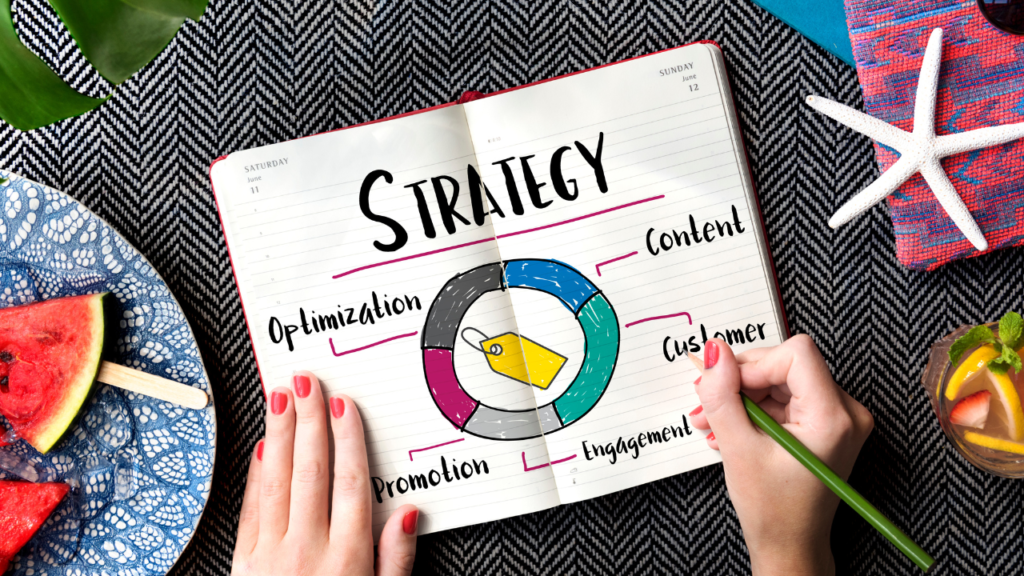
Our recipe for FMCG marketing success avoids disconnected launches, short-term thinking, and inconsistent execution. Success in this category is always measured in numbers. But not all numbers carry the same weight. Impressions don’t move what’s on shelves. Therefore, our five pillars define our measurable work, from planning to execution and evaluation.
1- Strategy Before Execution
Mind comes before muscles. The same thing applies to MCG marketing strategy principles and execution.
While launching a campaign without guidance is easy, achieving growth isn’t. Without a strategy, your posts, ads, and entire campaign will be hovering in the dark. There is no clear answer to the core question, like:
- Who is it for?
- What flow of order does it follows
- How is success measured?
Strategy brings logic and order to an FMCG campaign. And gives answers to these questions. For FMCG campaigns in the GCC region, the strategy also targets scalability across different markets while maintaining coherence.
2- Consumer Understanding at Depth

Being a consumer doesn’t qualify a marketer to speak for all consumers. In FMCG marketing strategy principles, assumptions are expensive. When opinions rather than insight drive decisions, brands lose the leading edge and misread demand. They become only reactive and pushed to perform late adjustments.
Deep understanding of consumers requires collecting relevant demographic data and realizing the cultural context. This kind of knowledge decodes the audience’s ways of thinking and the true drivers of purchase decisions. According to research published by EWA, conducting data analysis reveals consumer habits and values that matter to marketing precision.
Only then, brands ditch useless approaches of consistently talking to people. Instead, marketers can speak in a way that fits the audience’s expectations and buying moments.
3- Brand Consistency Everywhere for Proper FMCG Marketing Strategy Principles

When selecting visuals for a campaign, we don’t treat them as decorative or aesthetic choices. Engagement and interaction don’t happen because of the most creative graphics. What truly catches consumers’ eyes are distinctive, scalable, and consistent visuals.
For instance, in the GCC, each visual has to survive an extreme context variation and cross-channel exposure. It starts on a compact smartphone screen and shifts a crowded shelf at a busy hypermarket. If it only succeeds in one channel, it’s not successful at all.
At FMCG360, when working on FMCG marketing strategy principles, we prioritize adaptability over decoration. For us, a usable visual is one that effectively travels this journey without losing recognition or diluting the message. This consistency reduces friction at the moment of exposure and supports brand recognition and recall.
4- Operations That Don’t Miss
In FMCG marketing, rushed executions don’t signal efficiency or potential success. It’s a symptom of weak planning. More importantly, being late or rushed means a missed retail window and a failed product launch.
That’s why every campaign should operate within a defined timeframe that is acknowledged and followed by all teams involved. Within our operational structure, we account for market constraints, such as approval cycles, lead times, and logistical realities of regional rollouts.
5- Results, Not Noise

While engagement rates can look impressive, they remain vanity metrics. Let’s be honest, a thousand likes on an Instagram post can’t save a brand if products remain on the shelf. That’s why we focus on priority outcomes. This includes sales contributions, conversion behavior, and long-term loyalty.
Our reports don’t just show how many people saw the campaign, but how many acted on it. This is how we evaluate a campaign’s success.
Proper FMCG marketing strategy principles aren’t about louder campaigns and prettier visuals. It’s a comprehensive commercial system that’s built on strategy, consumer reality, operational understanding, and measurable outcomes. The five pillars above aren’t just theoretical concepts but reliable practices that can actually move inventory.
At FMCG360, titles follow execution, not the other way around. That’s how we managed to focus on what really matters: momentum.
Looking for an FMCG partner that looks beyond vanity numbers and focuses on measurable results? Contact us and get to know how we function with brands across the GCC region.